


Humanitarian action involves immediate emergency actions that address significant needs for protection, health, water, hygiene and sanitation that emerge as a result of either a conflict or disaster.

Quick Impact Workshop – Outcomes Post Tropical Cyclone Pam Roundtable with Civil Society
Tropical Cyclone Pam hit Vanuatu and surrounds in March 2015. The Department of Foreign Affairs and Trade (DFAT) led the Australian response, which also involved significant Defence engagement and the substantial use of military assets.
Published
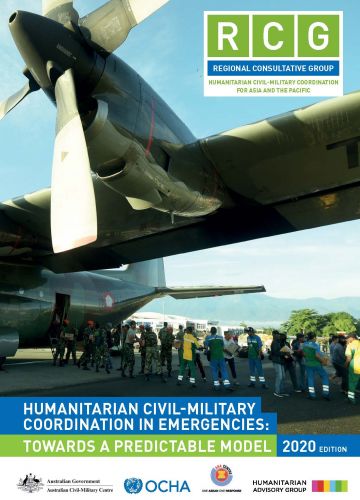
Humanitarian Civil-Military Coordination in Emergencies: Towards a Predictable Model
The Regional Consultative Group (RCG) on Humanitarian Civil-Military Coordination (CMCoord) for Asia and the Pacific is a key forum for supporting and elevating coordination, building relationships, and sharing learning to enhance and strengthen emergency response.
Published
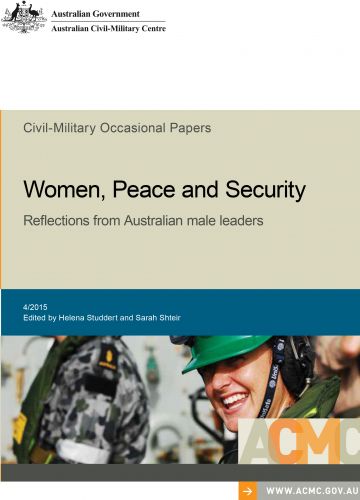
Women, Peace and Security: Reflections from Australian male leaders
Moving past the theoretical by drawing together the real-life experiences, reflections and lessons of male leaders from the Australian Defence Force, the Australian Federal Police and civilians.
Article date
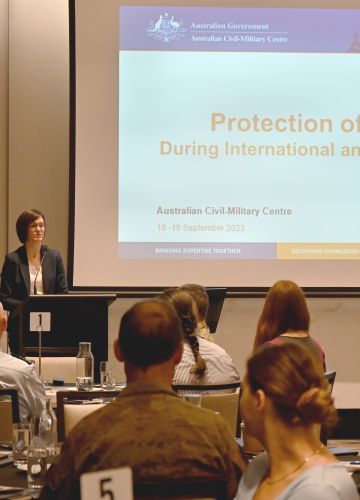
ACMC convened a workshop to consider the changing context of Protection of Civilians (POC) and identify emerging challenges and avenues to minimise the risk to civilians in crisis.
Published
Civil-Military-Police Language Guide: Promoting shared understanding
The civil-military-police community is as diverse as it is broad. It contains a wide range of actors who employ a variety of methodologies and techniques, use unique equipment and often pursue different objectives in service of different masters.

Civil Society Engagement Adviser
Tim Anderson
The ACFID seconded Civil Society Engagement Adviser to the Australian Civil-Military Centre contributes to the advancement of national capabilities to prevent, prepare for and respond more effectively to humanitarian crises through advancements in civil-military-police engagement. Building upon the partnership approach to civil-military-police engagement, the Civil Society Engagement Advisor convenes, facilitates dialogue, and provides policy advice to the stakeholder networks of both ACFID and the ACMC to strengthen understanding of the role, mandate and guiding principles of NGO engagement in humanitarian action.
Article date
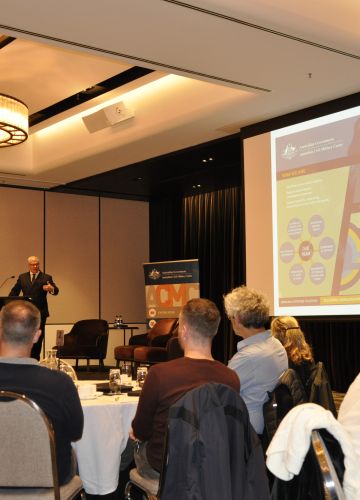
Public servants from the Australian and New Zealand governments, and civil society personnel attended the two-day Civil-Military-Police Interaction Workshop (CMPIW) in Canberra on 18 and 19 June. The aim of the CMPIW was to build capacity and knowledge among mid-career professionals by exposing delegates to a range of tools, exercises and case studies on civil-military-police coordination.
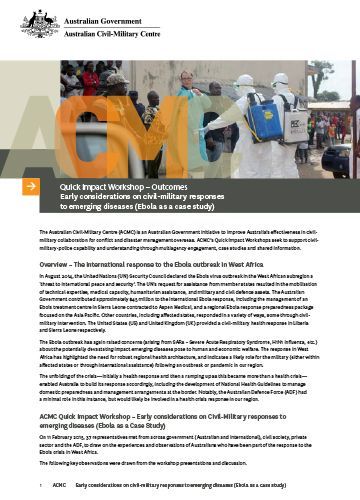
Quick Impact Workshop – Outcomes Early considerations on civil-military responses to emerging diseases - Ebola as a case study
In August 2014, the United Nations (UN) Security Council declared the Ebola virus outbreak in the West African subregion a ‘threat to international peace and security’. The UN’s request for assistance from member states resulted in the mobilisation of technical expertise, medical capacity, humanitarian assistance, and military and civil defence assets.

Article date
ACMC has worked with Tuvaluan authorities and Australian and New Zealand stakeholders to further build Tuvalu capacity to prepare for and respond to natural disasters.
Tuvalu is particularly at risk from tropical cyclones and associated storm surges and flooding. In recent years, the Pacific Island nation has been impacted by inundation from king/spring tides (Feb 2024), Cyclone Tino (2020) and Cyclone Pam (2015).