


Humanitarian action involves immediate emergency actions that address significant needs for protection, health, water, hygiene and sanitation that emerge as a result of either a conflict or disaster.
Published
ASEAN-Australian Women, Peace and Security Dialogue
The United Nations’ Women, Peace and Security (WPS) agenda has emerged over the past decade and a half as a significant cross-cutting thematic program for achieving global peace and security.
Article date
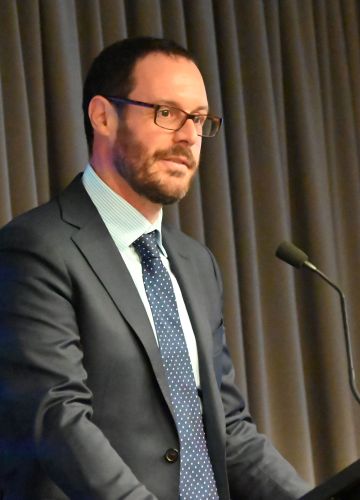
More than 60 participants from across government agencies and civil society considered a range of issues such as how gender impacts protection, the particular risks in urban and maritime warfare, the humanitarian consequences of mis and disinformation, and how cultural property can be better protected.
Published
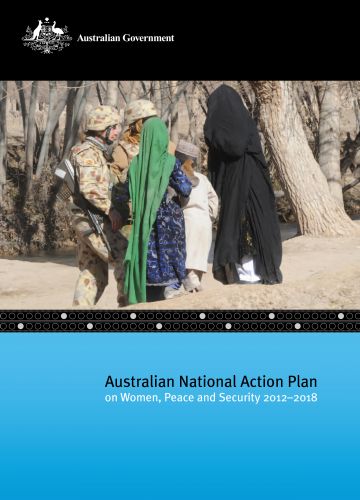
Australian National Action Plan on Women, Peace and Security 2012-2018
The National Action Plan sets out what Australia will do, at home and overseas, to integrate a gender perspective into its peace and security efforts, protect women and girls’ human rights, and promote their participation in conflict prevention, management and resolution. ACMC has a role in the design and implementation of this plan.
Article date
During the last 12 months, ACMC has worked with ACFID and an expert working group to revise its flagship publication Same Space, Different Mandates
Published
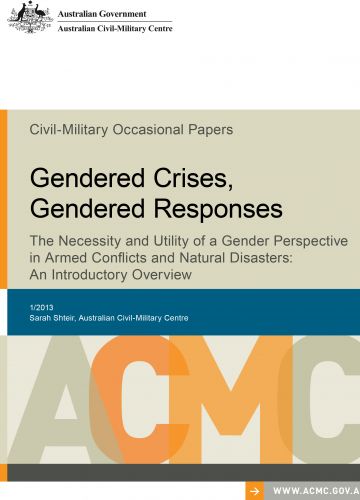
Gendered Crises, Gendered Responses
The Necessity and Utility of a Gender Perspective in Armed Conflicts and Natural Disasters: An Introductory Overview.
Article date
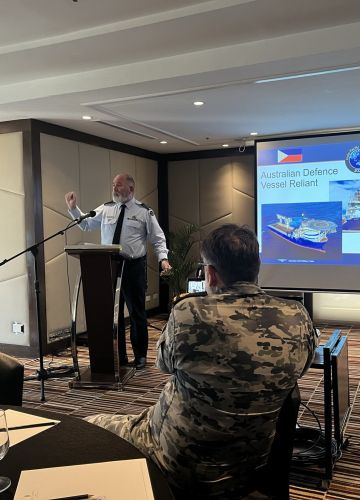
The Australian Civil Military Centre (ACMC), the Philippines Office of Civil Defense and the Armed Forces of the Philippines conducted a three-day disaster relief table top exercise in Manila on 10-12 September.
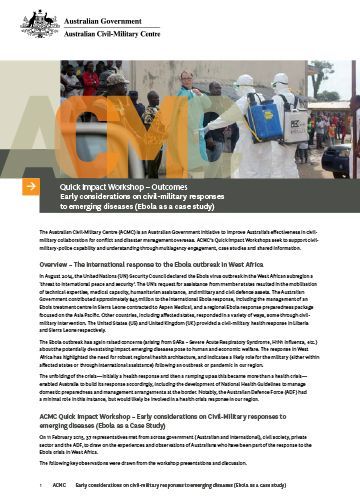
Quick Impact Workshop – Outcomes Early considerations on civil-military responses to emerging diseases - Ebola as a case study
In August 2014, the United Nations (UN) Security Council declared the Ebola virus outbreak in the West African subregion a ‘threat to international peace and security’. The UN’s request for assistance from member states resulted in the mobilisation of technical expertise, medical capacity, humanitarian assistance, and military and civil defence assets.
Article date
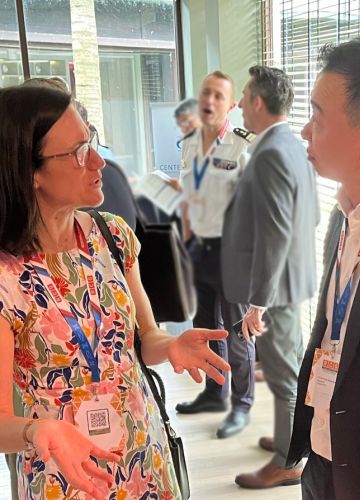
The RCG is the region’s premier forum for Governments, civil society, militaries and police to exchange on civil-military-police coordination. ACMC is a member of the RCG co-secretariat. The 10th annual RCG meeting was conducted in Phuket.
Published
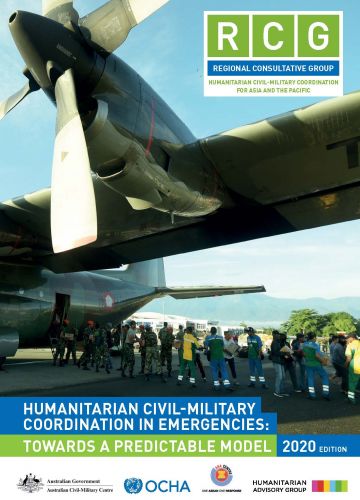
Humanitarian Civil-Military Coordination in Emergencies: Towards a Predictable Model
The Regional Consultative Group (RCG) on Humanitarian Civil-Military Coordination (CMCoord) for Asia and the Pacific is a key forum for supporting and elevating coordination, building relationships, and sharing learning to enhance and strengthen emergency response.