


Responses to catastrophic disasters and complex security challenges in the Indo-Pacific require a coordinated, joined-up response, drawing on broad-ranging civil-military-police expertise.
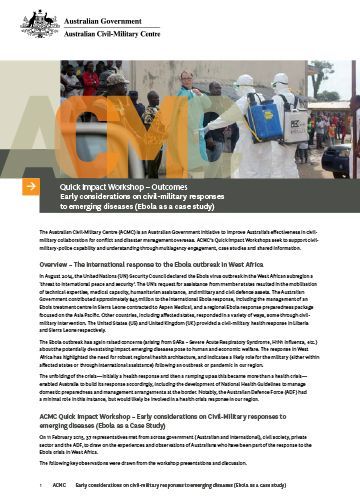
Quick Impact Workshop – Outcomes Early considerations on civil-military responses to emerging diseases - Ebola as a case study
In August 2014, the United Nations (UN) Security Council declared the Ebola virus outbreak in the West African subregion a ‘threat to international peace and security’. The UN’s request for assistance from member states resulted in the mobilisation of technical expertise, medical capacity, humanitarian assistance, and military and civil defence assets.
Article date
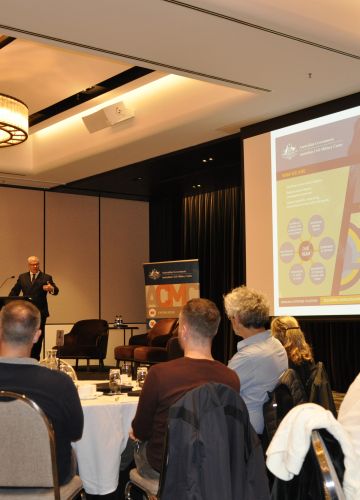
Public servants from the Australian and New Zealand governments, and civil society personnel attended the two-day Civil-Military-Police Interaction Workshop (CMPIW) in Canberra on 18 and 19 June. The aim of the CMPIW was to build capacity and knowledge among mid-career professionals by exposing delegates to a range of tools, exercises and case studies on civil-military-police coordination.
Published
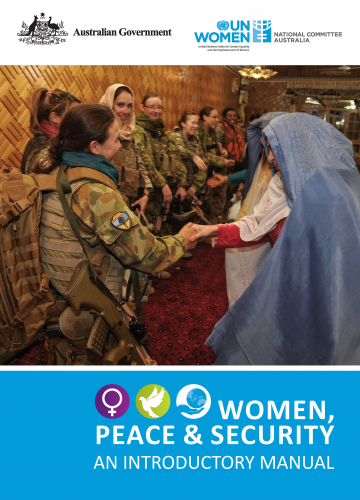
Women, Peace and Security: An Introductory Manual
Women’s leadership and collective action have changed the world by combatting violence against women and building equality. Women’s leadership is central to reconciliation and conflict resolution and to peacebuilding efforts that bring results for families and communities.
Published
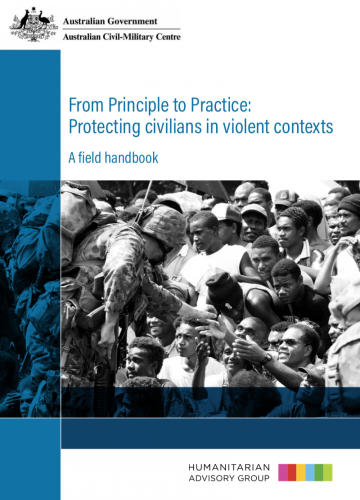
From Principle to Practice: Protecting civilians in violent contexts
Following on from the ACMC Australian Guidelines for the Protection of Civilians (2015) this handbook aims to provide the ‘what’, the ‘why’ and the ‘how’ of protecting civilians in violent contexts and is intended for people working at the operational level including government, NGOs, UN and other organisations.
Published
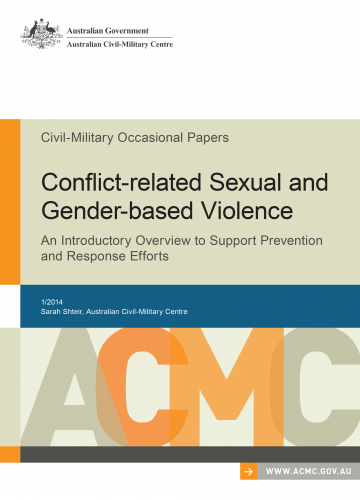
Conflict-related Sexual and Gender-based Violence
An introductory overview to support prevention and response efforts.
Published
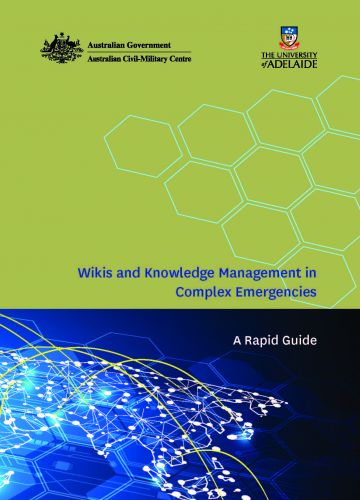
Wikis and Knowledge Management in Complex Emergencies
The Communication and Complex Emergencies Project is a multi-phase collaboration between the University of Adelaide’s Applied Communication Collaborative Research Unit and the Australian Civil-Military Centre.
Published
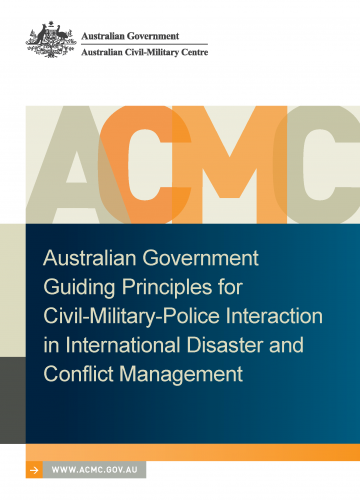
Australian Government Guiding Principles for Civil-Military-Police Interaction in International Disaster and Conflict Management
This document affirms the principles that guide the Australian Government and its stakeholders in international multiagency response efforts. It captures the best of the learning that has come from the Australian experience of contemporary operations overseas.
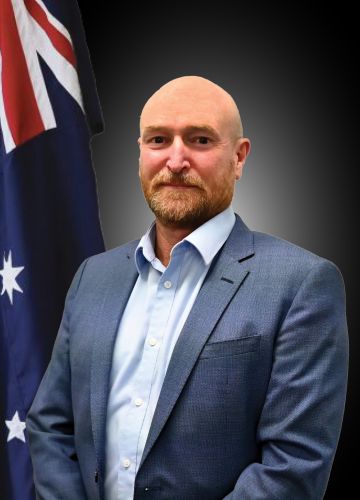
Civil Society Engagement Adviser
Tim Anderson
The ACFID seconded Civil Society Engagement Adviser to the Australian Civil-Military Centre contributes to the advancement of national capabilities to prevent, prepare for and respond more effectively to humanitarian crises through advancements in civil-military-police engagement. Building upon the partnership approach to civil-military-police engagement, the Civil Society Engagement Advisor convenes, facilitates dialogue, and provides policy advice to the stakeholder networks of both ACFID and the ACMC to strengthen understanding of the role, mandate and guiding principles of NGO engagement in humanitarian action.

Director, Concepts and Capability
Mr Brian Boulton, AM, CSC
The Concepts and Capability Directorate integrates cross-agency programs on emerging civil-military-police concepts with research and initiatives building capability through preparedness, lessons and evaluation, and humanitarian-government coordination. The Directorate also includes ACMC’s Business Operations and Governance functions.