


Leadership is less a process and more a culture. By empowering people to take ownership of their work, we can expect them to realise their full potential to accomplish their jobs and to be as innovative as possible.
Published
Enhancing the protection of civilians in Peace Operations from Policy to Practice - Summary Report
Civil-Military Affairs Conference 2011 Summary Report
Published
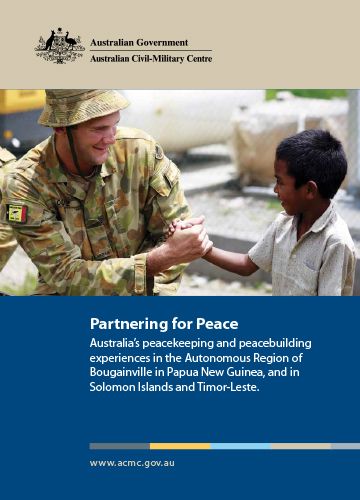
Partnering for Peace
Australia’s peacekeeping and peace-building experiences in the Autonomous Region of Bougainville in Papua New Guinea, and in Solomon Islands and Timor-Leste.
Published
Gendered Crises, Gendered Responses
The Necessity and Utility of a Gender Perspective in Armed Conflicts and Natural Disasters: An Introductory Overview.
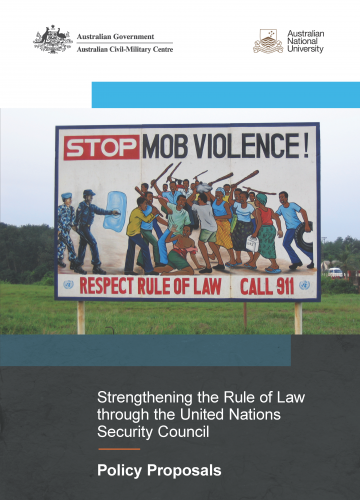
Strengthening the Rule of Law through the United Nations Security Council: Policy Proposals
These Policy Proposals are the product of a three-year Australian Research Council-funded project on ‘Strengthening the Rule of Law through the UN Security Council’.

Article date
The Australian Civil-Military Centre conducted a Civil-Military Interaction Workshop (CMIW) at the Australian Institute of Police Management in Manly, New South Wales in March 2017.

Military Adviser
ACMC Military Adviser
The ACMC's Military Adviser serves as a conduit to the Australian Defence Force and provides advice and insights from a military perspective.
Published
ASEAN-Australian Women, Peace and Security Dialogue
The United Nations’ Women, Peace and Security (WPS) agenda has emerged over the past decade and a half as a significant cross-cutting thematic program for achieving global peace and security.
Published
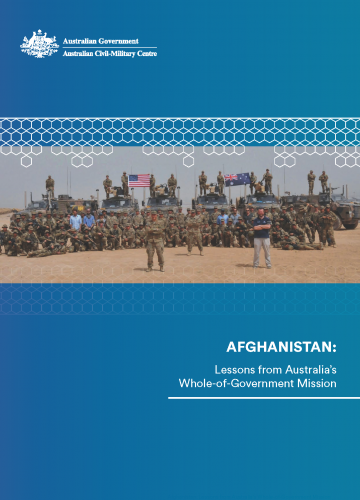
Afghanistan: Lessons from Australia’s Whole-of-Government Mission
Over the past two decades, Australia has accumulated considerable experience with whole-of-government missions in complex environments, including in the Solomon Islands and Timor-Leste.
National Action Plans on Women, Peace and Security - Eight Countries in Focus
The purpose of this report is to identify the lessons learned and emerging best practices of UN Member States committed to the implementation of this agenda through National Action Plans (NAPs).