


Gender equality, and placing diverse women’s voices, experiences and expertise at the centre of our security and peace work supports long term commitment to conflict prevention and sustainable peace.
Published
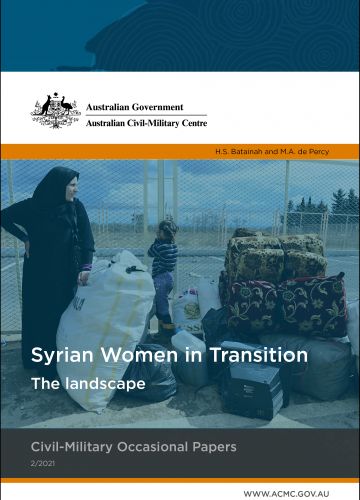
Syrian Women in Transition The Landscape - Civil-Military Occasional Papers 2/2021
Between November 2018 and November 2019, we conducted semi-structured interviews in Jordan and Lebanon, primarily in Arabic, with 100 women between the ages of 18 and 63 (most in their 30s and 40s). Our previous paper provides a snapshot of their personal experiences, showing the multi-faceted reality and diverse situations Syrian women face.
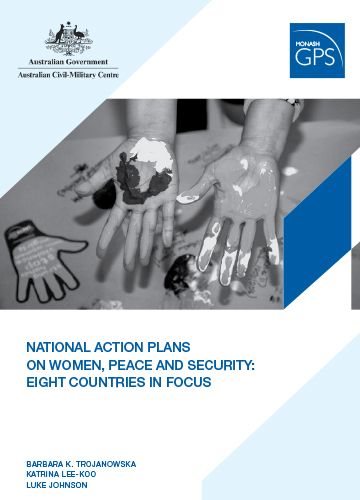
National Action Plans on Women, Peace and Security - Eight Countries in Focus
The purpose of this report is to identify the lessons learned and emerging best practices of UN Member States committed to the implementation of this agenda through National Action Plans (NAPs).
Article date
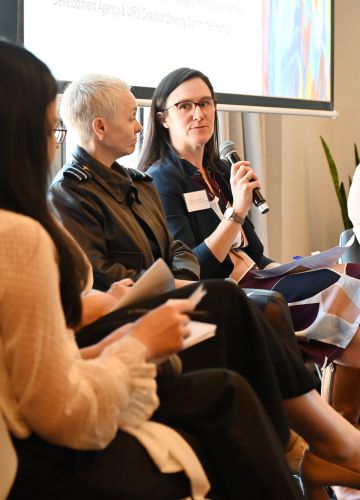
ACMC facilitated a dialogue between government and civil society on Women Peace & Security, which discussed the key role of women in peacebuilding, social cohesion and community resilience.

Article date
ACMC supported the Women, Peace and Security (WPS) Civil Society-Government Dialogue, in partnership with DFAT and the Australian Civil Society Coalition for WPS.
Published
ASEAN-Australian Women, Peace and Security Dialogue
The United Nations’ Women, Peace and Security (WPS) agenda has emerged over the past decade and a half as a significant cross-cutting thematic program for achieving global peace and security.
Article date
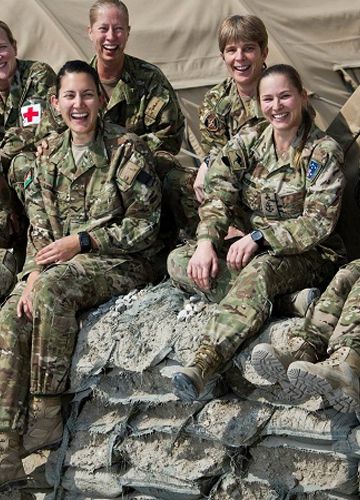
Researchers at the University of Queensland have completed Phase 1 of a commissioned study into Australian uniformed and civilian female personnel in peace and security operations.

Civil Society Engagement Adviser
Tim Anderson
The ACFID seconded Civil Society Engagement Adviser to the Australian Civil-Military Centre contributes to the advancement of national capabilities to prevent, prepare for and respond more effectively to humanitarian crises through advancements in civil-military-police engagement. Building upon the partnership approach to civil-military-police engagement, the Civil Society Engagement Advisor convenes, facilitates dialogue, and provides policy advice to the stakeholder networks of both ACFID and the ACMC to strengthen understanding of the role, mandate and guiding principles of NGO engagement in humanitarian action.
Published
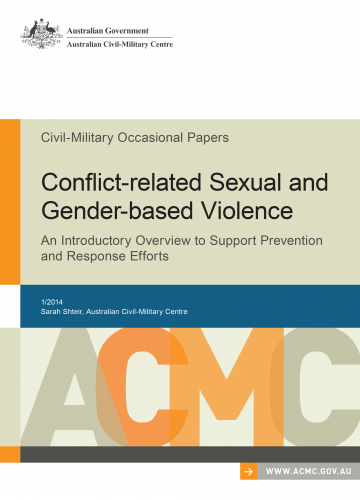
Conflict-related Sexual and Gender-based Violence
An introductory overview to support prevention and response efforts.

Director, Partnerships and Preparedness
Maryann Horne
The Directorate of Partnerships and Preparedness builds and fosters relationships with government and non-government stakeholders, using the work of ACMC to influence better policy and advocate for civil-military collaboration in that community.