
United Nations

Deepening skillsets and sharing experience at UN Civ-Mil course

Deepening skillsets and sharing experience at UN Civ-Mil course

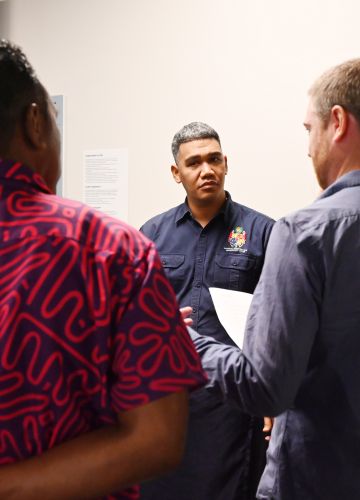
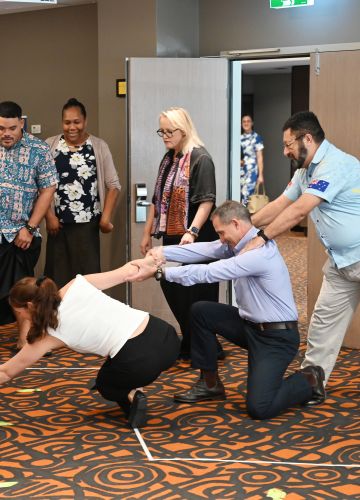
The training places participants from Australia, New Zealand, Fiji, French New Caledonia, Solomon Islands, Papua New Guinea, Tonga, Vanuatu and USA in the position of actors responding to a complex scenario involving diverse affected communities. Course participants are building their awareness of best practice civil-military coordination principles and sharing their knowledge and practical insights from previous disaster responses.
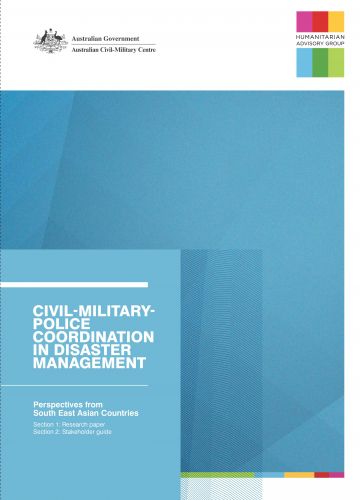
Civil-Military-Police Coordination in Disaster Management: Perspectives from South East Asian countries Research paper and Stakeholder Guide

Civil-Military-Police Coordination in Disaster Management: Perspectives from South East Asian countries Research paper and Stakeholder Guide

Responders to natural disasters face increasingly complex operating environments, characterised by new challenges and new actors. Global trends that are overwhelming the international humanitarian system come into sharp focus in South-East Asia.
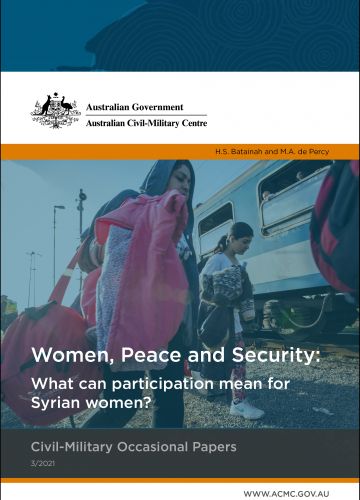
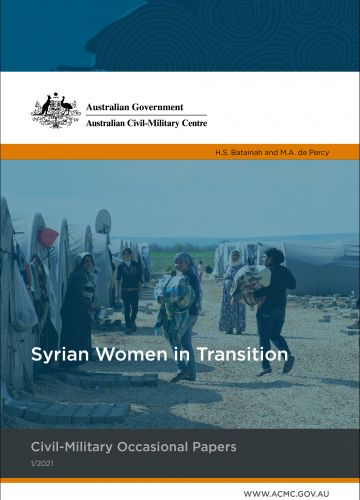
Women, Peace and Security; What can participation mean for Syrian women? - Civil-Military Occasional Papers 3/2021

Women, Peace and Security; What can participation mean for Syrian women? - Civil-Military Occasional Papers 3/2021

Between November 2018 and November 2019, the primary author conducted in-depth semi-structured interviews with 100 Syrian women in Jordan and Lebanon – host countries for large numbers of Syrian refugees (along with many Palestinian and Iraqi refugees) – and in Australia. The women were between the ages of 18 and 63; most were in their 30s and 40s. The primary author also interviewed people working with Syrian refugees in Jordan and Lebanon.
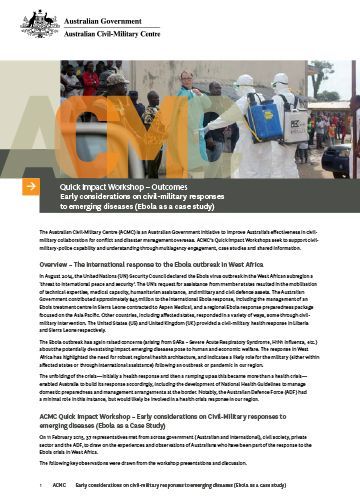
Quick Impact Workshop – Outcomes Early considerations on civil-military responses to emerging diseases - Ebola as a case study

Quick Impact Workshop – Outcomes Early considerations on civil-military responses to emerging diseases - Ebola as a case study

In August 2014, the United Nations (UN) Security Council declared the Ebola virus outbreak in the West African subregion a ‘threat to international peace and security’. The UN’s request for assistance from member states resulted in the mobilisation of technical expertise, medical capacity, humanitarian assistance, and military and civil defence assets.
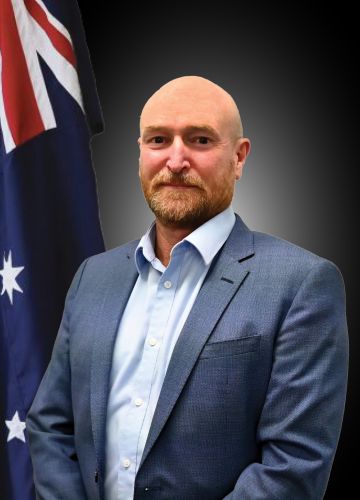
Tim Anderson
Civil Society Engagement Adviser

Tim Anderson

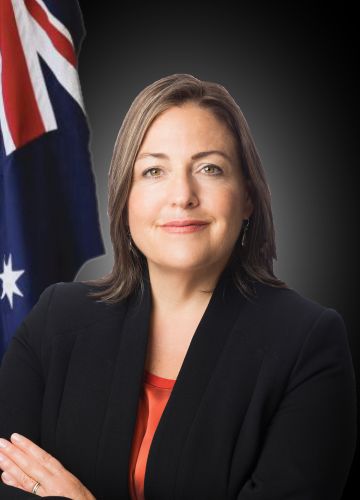
The ACFID seconded Civil Society Engagement Adviser to the Australian Civil-Military Centre contributes to the advancement of national capabilities to prevent, prepare for and respond more effectively to humanitarian crises through advancements in civil-military-police engagement. Building upon the partnership approach to civil-military-police engagement, the Civil Society Engagement Advisor convenes, facilitates dialogue, and provides policy advice to the stakeholder networks of both ACFID and the ACMC to strengthen understanding of the role, mandate and guiding principles of NGO engagement in humanitarian action.