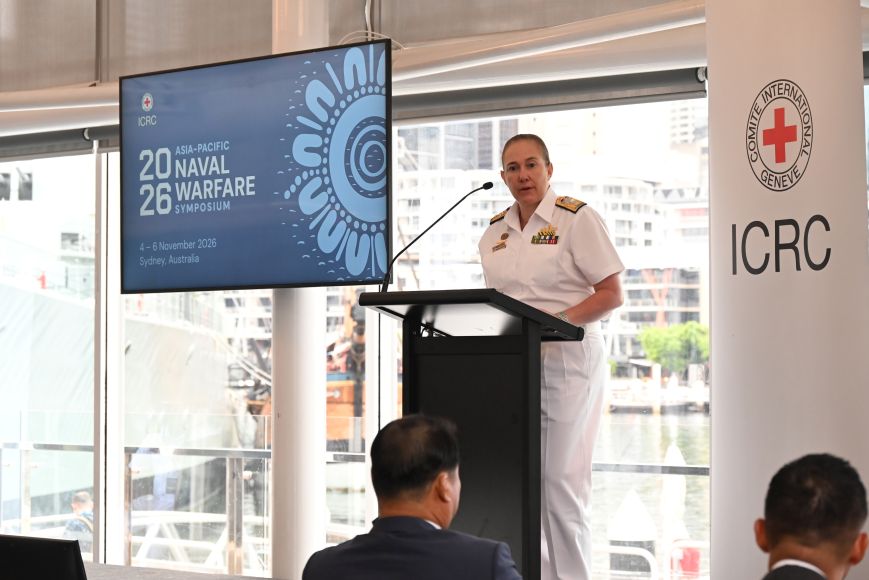
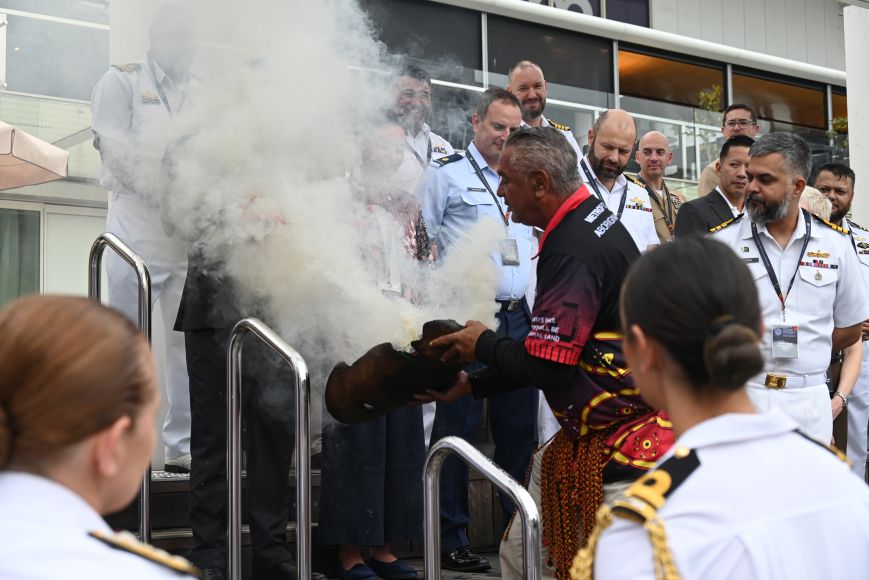
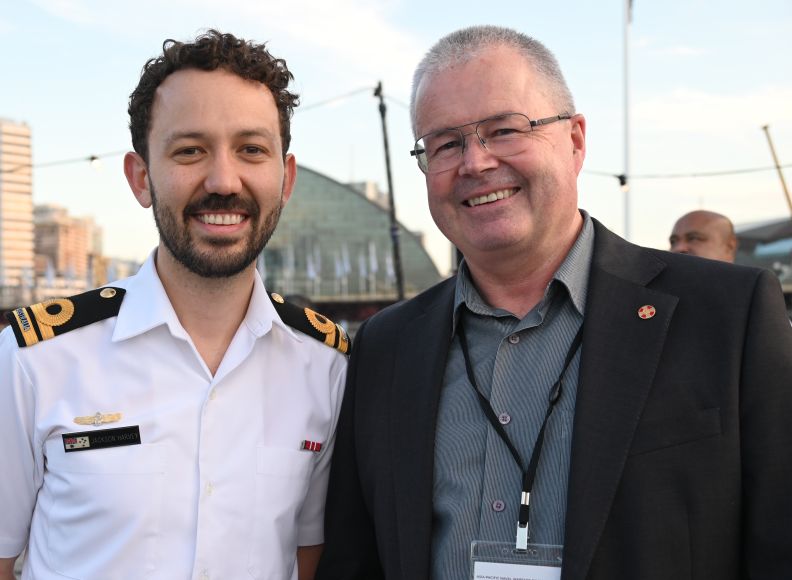
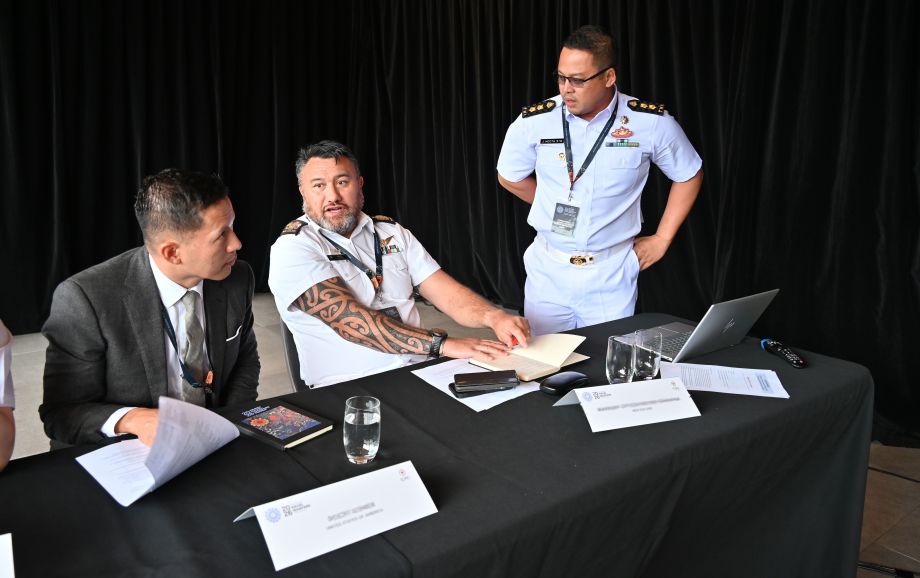
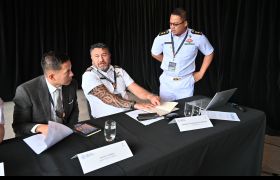
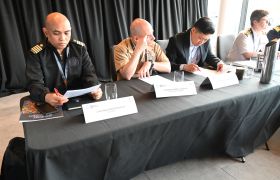
The Australian Civil Military Centre (ACMC), in partnership with the Australian Defence Force's Indo-Pacific Centre for Military Law, recently co-hosted the International Committee of the Red Cross (ICRC) Asia-Pacific Naval Warfare Symposium, bringing together military, legal and humanitarian experts from more than 20 countries to examine the challenges of contemporary maritime operations.
Hosted in Australia for the first time, the symposium provided a unique opportunity for regional partners to exchange operational lessons, strengthen professional networks and explore practical approaches to protecting civilians during maritime conflict.
As maritime security challenges continue to evolve across the Indo-Pacific, participants considered how military forces can operate effectively in increasingly contested and complex environments while maintaining compliance with International Humanitarian Law. Through expert presentations, case studies and scenario-based discussions, the symposium examined practical approaches to balancing military necessity with humanitarian considerations in modern naval operations.
Vice Admiral Justin Jones AO CSC, Commander Joint Operations, said understanding the protection challenges associated with contemporary warfare was both a legal, ethical and operational imperative.
"Protecting civilians during military operations is not simply a legal obligation. It is fundamental to maintaining legitimacy, preserving freedom of action and achieving operational success in today's complex security environment," Vice Admiral Jones said.
"Contemporary maritime operations demand professional mastery, sound judgement and the ability to make decisions at speed in complex and contested environments. By bringing together practitioners from across our region, this symposium helps us strengthen interoperability, share lessons and build the professional relationships needed to address future maritime challenges together."
A recurring theme throughout the symposium was that discussing complex operational and legal challenges before conflict occurs improves preparedness and supports decision-making during crises.
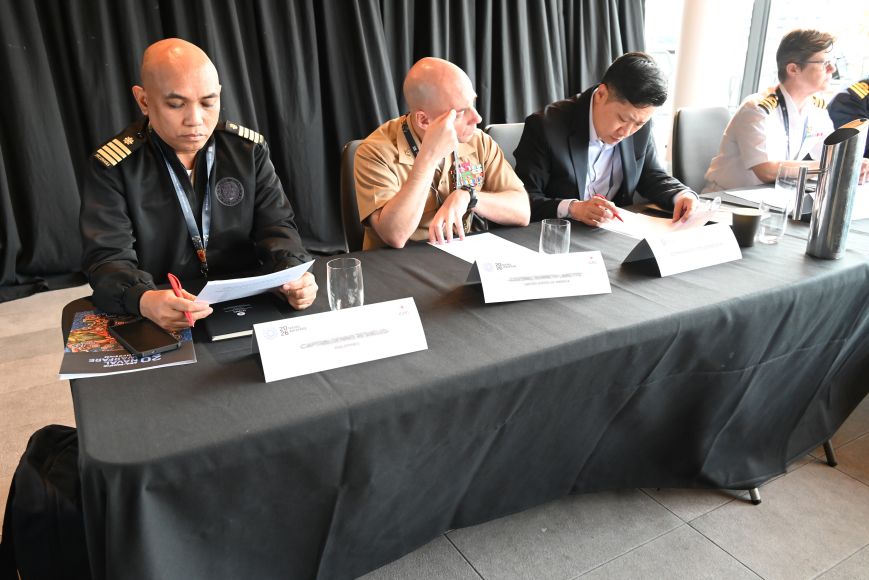
Participants explored real-world scenarios and the complex challenges in applying International Humanitarian Law in a range of fast-evolving contexts. They also discussed their own regional challenges and compared notes on how they would respond in a way that respects international Law all while enhancing operational effectiveness. These discussions have supported the creation of a regional network to strengthen interoperability and commanders knowledge in real time, during fast changing multi-faceted environments.
The symposium also reinforced the longstanding and constructive relationship between the Australian Defence Force and the International Committee of the Red Cross, facilitated by the Australian Civil-Military Centre to improve Australia’s ability to respond to crises.
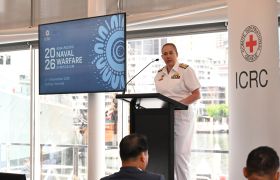
Rear Admiral Anita Williams CSC CSM, Commander Australian Fleet, welcomed the opportunity to strengthen regional cooperation through professional military dialogue.
“The Royal Australian Navy is delighted to support this symposium. The participation of regional militaries alongside the ADF to discuss such issues is a welcome opportunity.
“It is these types of initiatives that ensure our people are better equipped to understand what practical solutions exist and can be applied in times of crisis,” Rear Admiral Williams said.
The symposium highlighted Australia's ongoing commitment to fostering regional cooperation, advancing understanding and application of international law and strengthening preparedness for military operations across all domains. By connecting military leaders, legal specialists and humanitarian practitioners from across the Indo-Pacific, the event contributed to a stronger regional network focused on effective military operations and collaboration around protection of civilians during crises and armed conflict.