


Humanitarian action involves immediate emergency actions that address significant needs for protection, health, water, hygiene and sanitation that emerge as a result of either a conflict or disaster.
Article date
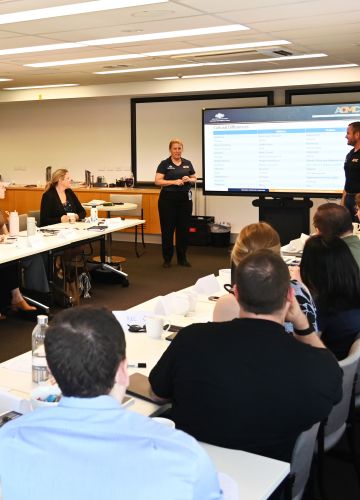
ACMC conducted an interagency liaison officer course for government officials from Defence, Home Affairs, Australian Border Force, Prime Minister and Cabinet and the Department of Foreign Affairs and Trade.
Published
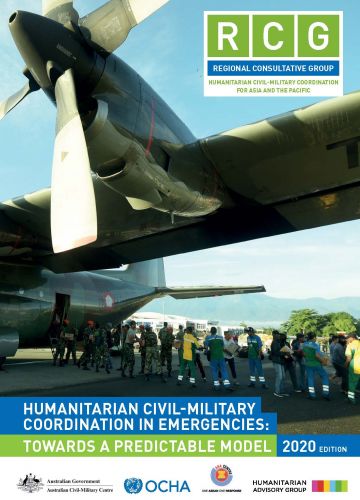
Humanitarian Civil-Military Coordination in Emergencies: Towards a Predictable Model
The Regional Consultative Group (RCG) on Humanitarian Civil-Military Coordination (CMCoord) for Asia and the Pacific is a key forum for supporting and elevating coordination, building relationships, and sharing learning to enhance and strengthen emergency response.
Article date
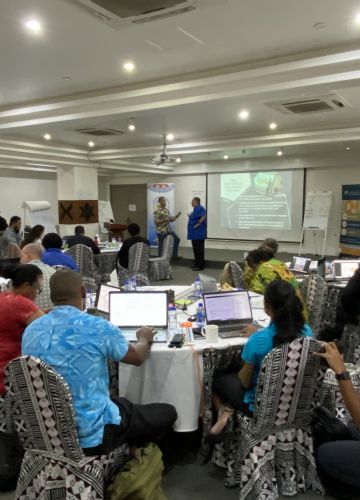
The training places participants from Australia, New Zealand, Fiji, French New Caledonia, Solomon Islands, Papua New Guinea, Tonga, Vanuatu and USA in the position of actors responding to a complex scenario involving diverse affected communities. Course participants are building their awareness of best practice civil-military coordination principles and sharing their knowledge and practical insights from previous disaster responses.
Article date
The Australian Civil-Military Centre (ACMC), United Nations Office for the Coordination of Humanitarian Affairs (UN OCHA) and the US Centre for Excellen
Published
Skills for Multiagency Responses to International Crises
Australian responses to international, complex emergencies and humanitarian crises, generated by natural disaster, conflicts or incidents, demand the coordinated responses of multiple civil-military-police actors and agencies.
Article date
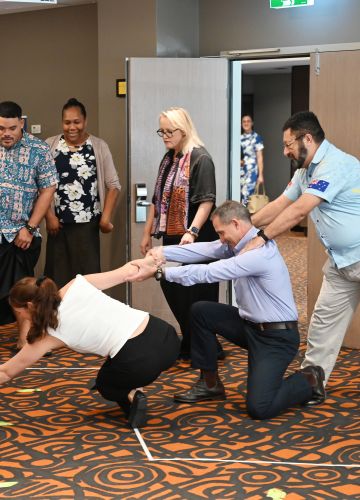
ACMC delivered a United Nations Humanitarian Civil Military Coordination (CM Coord) training course in Nadi, Fiji, along with key regional and global partners.
National Action Plans on Women, Peace and Security - Eight Countries in Focus
The purpose of this report is to identify the lessons learned and emerging best practices of UN Member States committed to the implementation of this agenda through National Action Plans (NAPs).
Published
Women, Peace and Security: Reflections from Australian male leaders
Moving past the theoretical by drawing together the real-life experiences, reflections and lessons of male leaders from the Australian Defence Force, the Australian Federal Police and civilians.
Article date
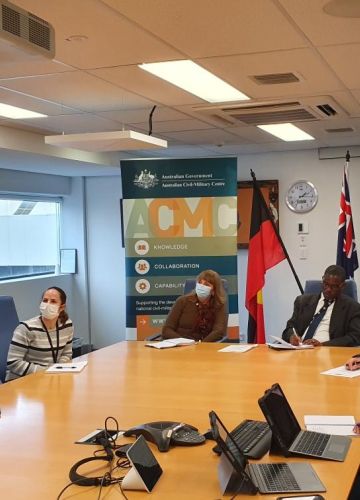
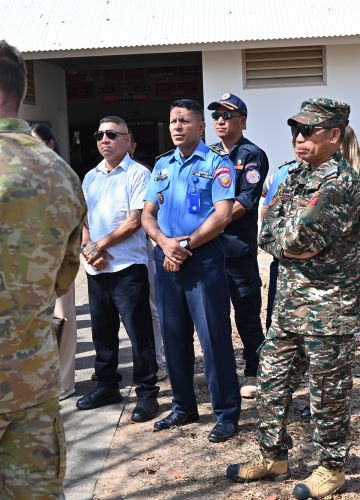
ACMC hosted representatives from various Timor-Leste disaster response agencies in Darwin to share experiences and knowledge on civil, military and police coordination in disaster response.