


Humanitarian action involves immediate emergency actions that address significant needs for protection, health, water, hygiene and sanitation that emerge as a result of either a conflict or disaster.
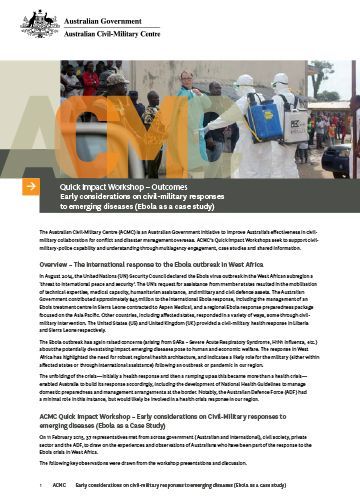
Quick Impact Workshop – Outcomes Early considerations on civil-military responses to emerging diseases - Ebola as a case study
In August 2014, the United Nations (UN) Security Council declared the Ebola virus outbreak in the West African subregion a ‘threat to international peace and security’. The UN’s request for assistance from member states resulted in the mobilisation of technical expertise, medical capacity, humanitarian assistance, and military and civil defence assets.
Published
Complex Emergencies in a Digital World: A Rapid Guide
The Communication and Complex Emergencies Project is a multi-phase collaboration between the University of Adelaide’s Applied Communication Collaborative Research Unit and the Australian Civil-Military Centre.
Published
Humanitarian Civil-Military Coordination in Emergencies: Towards a Predictable Model
Grounded in the experience of five highly disaster-exposed countries: Fiji, Papua New Guinea, Solomon Islands, Tonga and Vanuatu, this Pacific Edition maps key civil-military coordination mechanisms at regional and national levels.

Civil Society Engagement Adviser
Tim Anderson
The ACFID seconded Civil Society Engagement Adviser to the Australian Civil-Military Centre contributes to the advancement of national capabilities to prevent, prepare for and respond more effectively to humanitarian crises through advancements in civil-military-police engagement. Building upon the partnership approach to civil-military-police engagement, the Civil Society Engagement Advisor convenes, facilitates dialogue, and provides policy advice to the stakeholder networks of both ACFID and the ACMC to strengthen understanding of the role, mandate and guiding principles of NGO engagement in humanitarian action.

Article date
ACMC supported the Women, Peace and Security (WPS) Civil Society-Government Dialogue, in partnership with DFAT and the Australian Civil Society Coalition for WPS.
Published
Social Media in Complex Emergencies: A Rapid Guide
The Communication and Complex Emergencies Project is a multi-phase collaboration between the University of Adelaide’s Applied Communication Collaborative Research Unit and the Australian Civil-Military Centre.
Article date
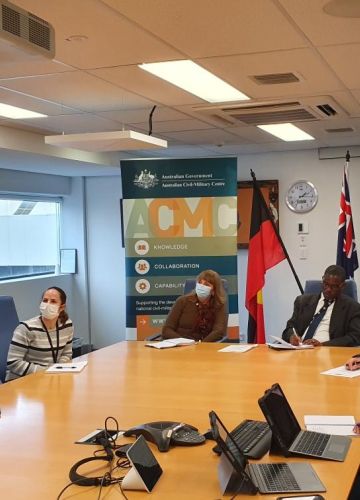
The Australian Civil-Military Centre (ACMC), United Nations Office for the Coordination of Humanitarian Affairs (UN OCHA) and the US Centre for Excellen
Published
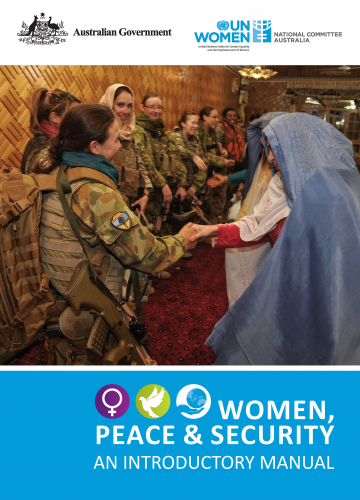
Women, Peace and Security: An Introductory Manual
Women’s leadership and collective action have changed the world by combatting violence against women and building equality. Women’s leadership is central to reconciliation and conflict resolution and to peacebuilding efforts that bring results for families and communities.